


Building Beverage Merchandising Moments for Energy, Coffee, and Tea
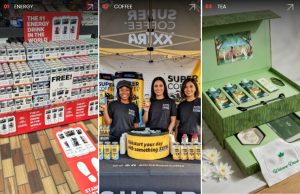
Walk into almost any grocery store, convenience store, café, hotel lobby, campus dining space, gym, office, or event environment, and one thing becomes clear: beverage moments are everywhere.
Energy drinks are showing up as focus tools, workout companions, and workday fuel. Ready-to-drink coffee has become part of morning routines, afternoon resets, and grab-and-go rituals. Tea is moving across refreshment, wellness, lifestyle, and functional occasions.
These categories are not simply competing for cooler space. They are competing for relevance in the daily routines of consumers who are moving quickly, making choices constantly, and expecting more from what they drink.
That creates a major opportunity for brands. But it also creates a challenge: When beverage choices are everywhere, the physical brand experience has to do more than announce availability. It has to clarify the moment, shape the interaction, and extend the brand beyond the point of purchase. Because for energy, coffee, and tea brands, the opportunity is no longer just in the cooler. It is in the full merchandising system built around it.
Consumers Are Buying the Moment
One of the biggest mistakes beverage brands can make is thinking the product is the entire story. It rarely is.
A consumer reaching for an energy drink before a long drive is not shopping the same way as someone looking for an afternoon lift. A person grabbing cold brew on the way to work is in a different mindset than someone choosing a bottled coffee as a treat. A shopper selecting tea from a cooler may be looking for refreshment, calm, function, flavor, or simply something that feels lighter.
The product matters, of course. But the need-state drives the decision. That is why beverage merchandising has to start with a more strategic question: What role does this beverage play in the consumer’s day?
Energy often solves for urgency. Coffee often solves for routine. Tea often solves for refreshment or reset. Each category has its own rhythm, and each rhythm should influence how the brand shows up in physical spaces.
Retail Creates the First Point of Decision
In retail, merchandising is often the bridge between awareness and action. A shopper may know the brand. They may have seen the product online. They may even have tried it before. But at the shelf, cooler, endcap, or checkout counter, the decision still has to be made again. That is where point-of-sale strategy becomes critical.
Floor displays can create interruption. Cooler graphics can reinforce recognition at the moment of selection. Shelf strips can simplify benefits. Case stackers can support volume. Endcaps can turn a product into a destination. Counter units can capture impulse in the final few feet. Each touchpoint has a different job. Together, they should create a clear path from notice to purchase.
The strongest retail merchandising does not try to say everything. It says the right thing in the right place. It understands whether the shopper needs a reason to stop, a reason to choose, or a reason to buy more. That distinction matters. Because in a crowded beverage environment, clarity often converts better than noise.
On-Premise Turns Availability Into Behavior
In on-premise environments, the mechanics change. There is no traditional shelf. No long aisle. No standard endcap. Instead, the brand shows up through service moments, staff interaction, menu visibility, sampling, branded tools, and the environment itself. This makes on-premise merchandising especially powerful for energy, coffee, and tea brands.
A branded fridge can turn a beverage into a destination point. A counter display can make the product feel like part of the ordering ritual. A menu insert can introduce a new serve or functional benefit. Branded cups and sleeves can extend visibility into the consumer’s hands. Staff apparel can create consistency and credibility. Sampling trays can make trial feel intentional rather than random. In these environments, merchandising is not just about being seen. It is about being suggested, served, carried, and remembered. That is especially important for categories built around repeat behavior. Coffee becomes part of a routine. Tea becomes part of a reset. Energy becomes part of a pre-workout, study session, workday, or travel moment.
The right physical tools help turn those use cases into behaviors.
Premium Merch Extends the Beverage Moment
For many beverage brands, branded merchandise is treated as an add-on. A hat for the event. A tote for the launch. A cup for the sampling team. A kit for influencers. A shirt for staff.
Useful? Yes. Strategic? Not always. But when premium branded merch is developed as part of the broader merchandising system, it becomes much more than a giveaway. It becomes a way to extend the beverage moment beyond the store, counter, event, or sampling table.
Custom apparel can outfit field teams, retail partners, ambassadors, or café staff in a way that makes the brand feel more present and consistent. Bags can support commuter, campus, gym, or event lifestyles. Drinkware can connect directly to the ritual of consumption. Kits can introduce a product story with more depth, especially for launches, retail partnerships, influencer seeding, or internal sales teams. The key is relevance.
A premium tumbler makes sense when the brand is tied to routine. A sling bag or tote makes sense when the brand is tied to movement. Apparel makes sense when the brand needs visibility in social, event, or on-premise settings. A curated kit makes sense when the goal is education, trial, or excitement around a new product.
The best branded merch does not sit outside the campaign. It makes the campaign more physical.
From Beverage Placement to Beverage Systems
The brands that stand out in energy, coffee, and tea are not simply producing more assets. They are building systems.
There is a difference. A display is an asset. A system understands where that display sits in the shopper journey. A branded cup is an asset. A system understands how that cup reinforces the serve, the ritual, and the brand memory. A sampling kit is an asset. A system understands how trial connects to education, retail conversion, and follow-up. A tote, shirt, or bottle is an asset. A system understands how that item extends the brand into real life.
This systems-based thinking is what turns merchandising from decoration into strategy. It connects product, occasion, channel, audience, and physical touchpoints into one cohesive experience. And for beverage brands operating across retail, on-premise, events, foodservice, corporate spaces, and lifestyle environments, that cohesion matters. Because consumers do not experience brands in silos. They experience them in moments.
Building the Beverage Brand Beyond the Cooler
Energy, coffee, and tea brands are operating in categories shaped by speed, variety, function, and habit. Consumers have more choices than ever, and brands have more places to show up than ever. That makes physical merchandising more important, not less.
The right retail display, branded fridge, staff apparel, sampling kit, custom bag, drinkware item, or on-premise tool can help a brand move from available to memorable. From product placement to brand presence. From a single interaction to a repeatable behavior. Because the beverage moment does not end at the cooler door. It continues in the hand, in the routine, in the environment, and in the branded items people choose to keep and use again.
Ready to build beverage merchandising systems that help energy, coffee, and tea brands show up beyond the cooler?
Let’s Talk | Learn More About What We Do